Boost asset safety and security
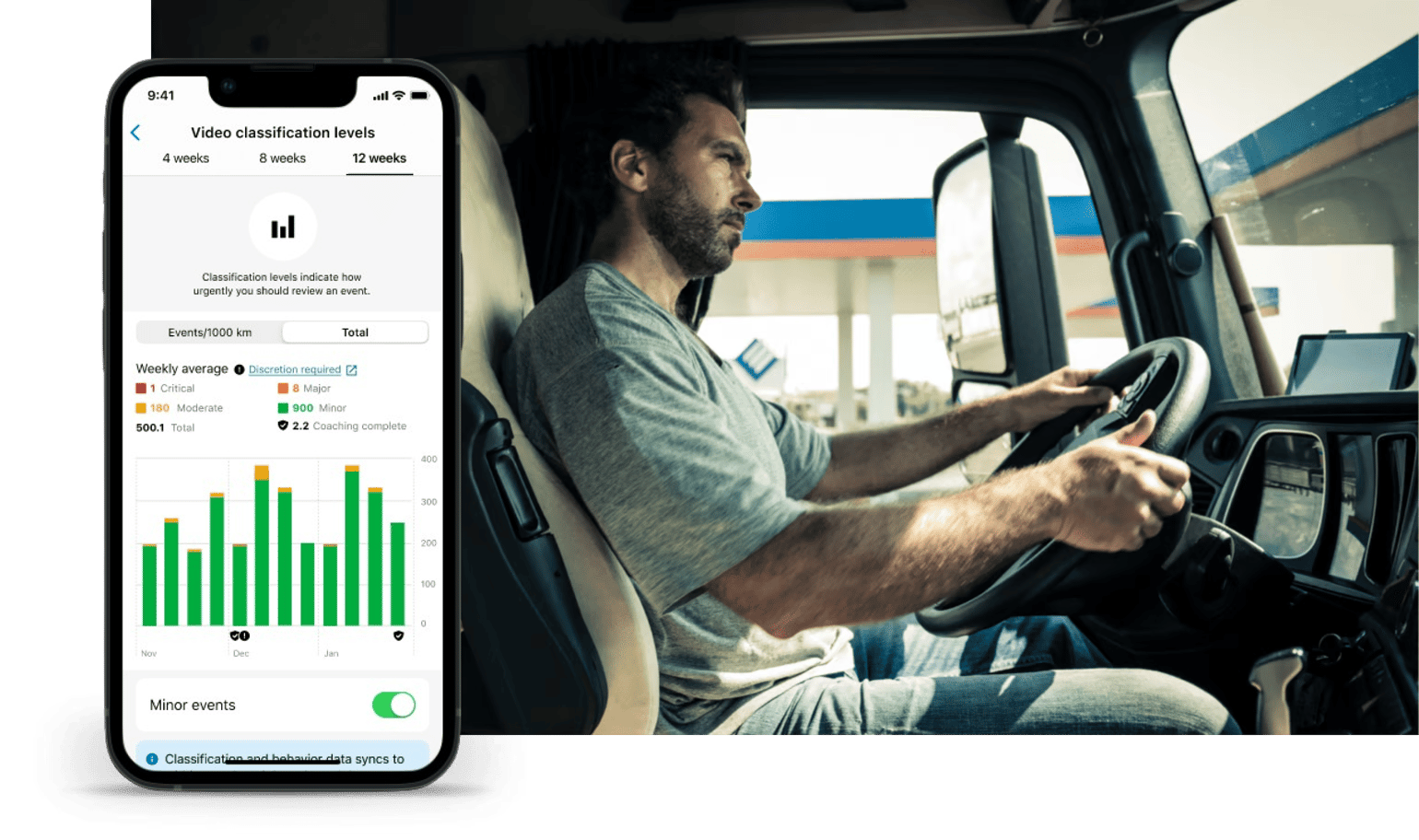
Safety first, security second
Enjoy the peace of mind that comes from using safer driving, security and compliance software by Verizon Connect.
Defend your drivers
Help reduce the risk of fleet vehicle accidents and encourage safer driving behaviors with near real time GPS tracking notifications from Verizon Connect. Our software helps ensure that safe driving is always a top priority, no matter what other concerns might be on the minds of your drivers.
Monitor safe speeds
Survey speeds across your fleet or monitor a single driver. Customize alerts to trigger at specific thresholds, including limits on private roads and hazardous areas.
Correct unsafe habits
Our driving safety systems detect speeding, aggressive driving, harsh braking and quick starts, issuing audible, in-cab alerts to correct dangerous driving behaviors.
Reward good behavior
Motivate your drivers to be safer behind the wheel with a point-based scoring system and fleetwide leaderboard. Offer rewards to top safety performers.
Offer safer routes
Stem dangers due to lost or confused driving with elite navigation that calculates truck-legal routes, minimizes left turns and provides detailed “last-mile” directions.
Limit your liability
Verizon Connect software helps you prevent the unauthorized use of take-home fleet vehicles to reduce your risk of worker accidents and their significant impact on insurance expenses. Monitor how your vehicles are being used around-the-clock to keep them secure and in top working shape.
Secure your sites
Promote workplace safety and asset security for workers, drivers, vehicles and equipment in the field with innovative solutions from Verizon Connect. We help you avoid the hazards common to job sites and create a culture and environment for safer and more secure operations.
Improve crisis response
Alert your office to a field worker in trouble with the press of a button. Activate the “man down” option to automate notifications, as with a fall. GPS-guided locations and status provide first responders with critical info in real time.
Restrict area access
Set up geofence alerts and use GPS tracking data to steer workers through or around dangerous areas, such as well sites and extreme temperature zones. Receive notifications when workers enter and exit hazardous places.
Offer help remotely
Allow your support team to access a vehicle’s remote services. Our software links to select vehicles, including those equipped with GM’s OnStar, so you can unlock a truck, start an engine, honk a horn or flash the lights from afar.
Limit driver hours
Balance workloads and keep your team members alert behind the wheel with electronic logging devices (ELD) from Verizon Connect. Our ELD solution automatically monitors hours of service, (HOS) helping to keep drivers safer and compliant.

Secure your assets
Protect your valuable equipment from theft with geofencing and real-time GPS tools from Verizon Connect. Our solutions provide alerts when an asset is tampered with, or removed from, its location. Recover expensive assets with software that keeps tabs on your vehicles and equipment at all times.
Maintain your equipment
Verizon Connect safety solutions put systems in place to safeguard your workers from inherently hazardous vehicles and equipment. Help keep your assets safer, more secure and in a well-maintained condition, with immediate access to documentation that proves it.
Get verified inspections
Certify thorough vehicle and equipment inspections with DVIR software from Verizon Connect. Have workers map their inspection walkaround path.
Keep forms accessible
Create digital forms for your mobile workers that help ensure safety on the job. Include photos and signatures, and upload on the spot.
Secure asset data
Sync and store your checklists, inspections, HOS and other safety data on secure web servers, keeping close track of your progress toward a safer workplace.
Set maintenance reminders
Never miss critical service appointments with automated alerts from Verizon Connect. Smart sensors track engine temperatures, clogged filters, mileage, hours and more.
